
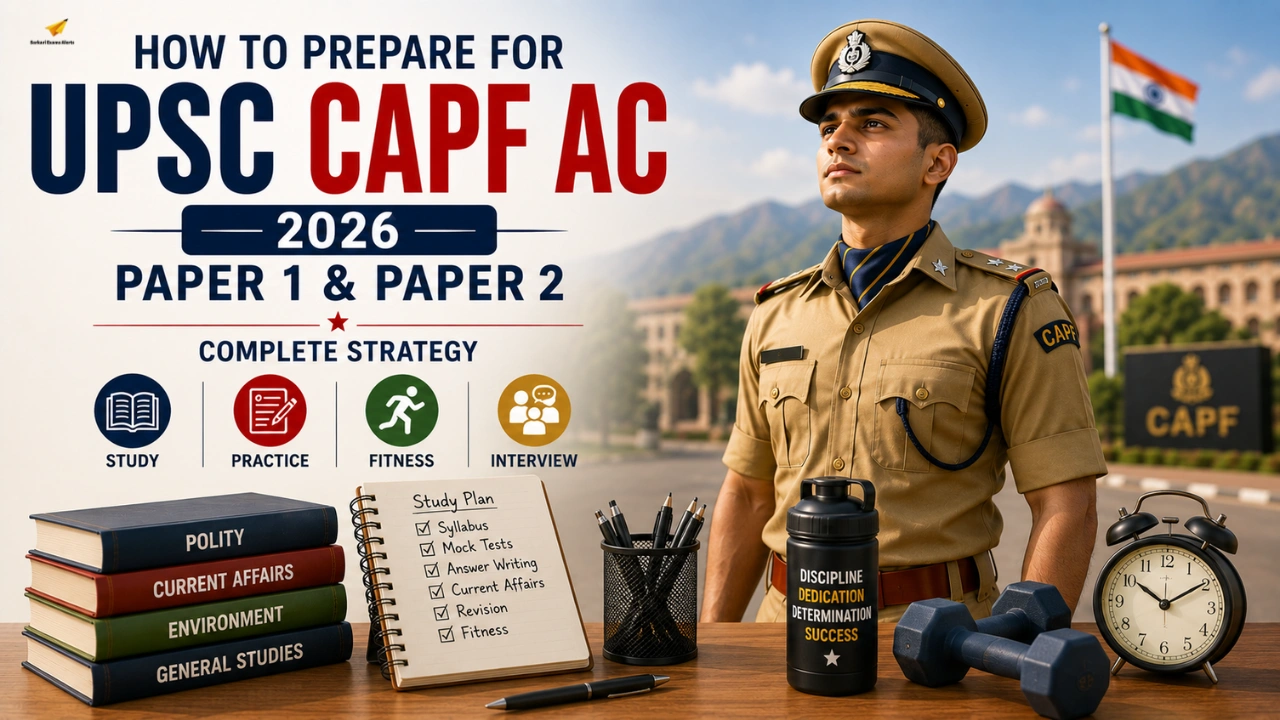
Prepare for UPSC CAPF AC: The UPSC Central Armed Police Forces (Assistant Commandant) Examination is one of India’s most prestigious recruitment examinations for graduates aspiring to become Group A Gazetted Officers in forces such as the BSF, CRPF, CISF, ITBP, and SSB. Conducted by the Union Public Service Commission (UPSC), the examination not only tests academic knowledge but also evaluates leadership potential, physical fitness, writing ability, and personality.
Unlike many competitive examinations, UPSC CAPF AC is a multi-stage selection process consisting of Paper 1 (Objective), Paper 2 (Descriptive), Physical Efficiency Test (PET), Medical Examination, and the Personality Test. Success therefore requires a balanced preparation strategy rather than focusing on only one stage of the recruitment process.
If you’re preparing for UPSC CAPF AC 2026, this guide explains how to build a structured preparation plan that strengthens your concepts, improves answer-writing skills, enhances physical fitness, and prepares you for the final interview.
What is UPSC CAPF AC?
CAPF AC exam is conducted by UPSC to recruit gazetted officers in Central Armed Police Forces. Posts are Group A Central Services. Assistant Commandant is an officer-level post, equivalent to a Deputy SP in state police. After selection you lead a company of 120 personnel in border guarding, internal security, or VIP protection duties. Age limit is 20 to 25 years. Qualification is graduation.
Also Read: How to Prepare for UPSC Prelims
14 Tips to Prepare for UPSC CAPF AC 2026
- Understand Every Stage of the Selection Process
Before beginning your preparation, familiarize yourself with the complete UPSC CAPF AC selection process, including Paper 1, Paper 2, the Physical Efficiency Test (PET), Medical Examination, and Personality Test. Each stage evaluates different skills, so your preparation should be balanced rather than focused only on the written examination. Knowing the exam pattern, syllabus, and marking scheme helps you create a structured study plan from the beginning.
- Build Strong Fundamentals Before Covering Advanced Topics
Instead of rushing through the syllabus, focus on strengthening your understanding of basic concepts in History, Polity, Geography, Economy, Science, Environment, and Current Affairs. Strong conceptual clarity makes it easier to solve objective questions in Paper 1 and write analytical answers in Paper 2.
- Prepare Paper 1 and Paper 2 Simultaneously
Many aspirants devote all their attention to Paper 1 and postpone descriptive preparation until later. This approach often leads to poor performance in Paper 2. Allocate dedicated time every week for essay writing, précis writing, reading comprehension, and report writing while continuing your objective preparation. Preparing both papers together helps maintain balance and reduces last-minute pressure.
- Read Newspapers with an Analytical Approach
Reading newspapers is not just about staying updated with current events. Develop the habit of understanding the background, causes, and impact of important national and international issues. Pay special attention to internal security, governance, defence, economy, environment, international relations, and government policies, as these topics frequently appear in both the written examination and the interview.
- Improve Your Answer Writing Skills
Paper 2 rewards candidates who can express their ideas clearly, logically, and within the prescribed time limit. Practice writing essays, arguments, and descriptive answers regularly. Focus on maintaining a clear structure with an introduction, well-organized body paragraphs, and a concise conclusion. Over time, this practice improves both writing speed and presentation.
- Strengthen Your English Communication
A good command of English benefits you throughout the CAPF selection process. Improve grammar, vocabulary, comprehension, and writing skills by reading newspapers, editorials, and quality magazines daily. Regular reading naturally enhances language proficiency and makes descriptive writing more effective.
- Make Current Affairs Part of Your Daily Routine
Current affairs should not be treated as a separate subject. Instead, integrate them with static topics such as Polity, Economy, Environment, and International Relations. Preparing concise monthly notes helps simplify revision during the final weeks before the examination.
- Prepare for the Physical Efficiency Test from Day One
Physical fitness cannot be developed overnight. Begin your PET preparation alongside your academic studies by including running, sprinting, long-distance endurance, strength training, flexibility exercises, and bodyweight workouts in your weekly routine. Consistent physical training improves stamina and prepares you for the demanding nature of the selection process.
- Solve Previous Years’ Question Papers Regularly
Previous years’ papers provide valuable insights into the examination pattern, frequently asked topics, and the level of difficulty. Solve them topic-wise during the early stages of preparation and attempt full papers under timed conditions as the examination approaches. Analysing your mistakes is equally important for continuous improvement.
- Attempt Mock Tests and Analyse Every Mistake
Mock tests should be viewed as learning opportunities rather than scorecards. After every mock test, spend time analysing incorrect answers, identifying weak topics, and understanding why mistakes occurred. This habit gradually improves accuracy, decision-making, and confidence.
- Maintain Short Notes for Quick Revision
As your preparation progresses, create concise notes for important facts, constitutional provisions, economic concepts, environmental conventions, current affairs, and essay points. These notes become invaluable during the final revision phase when time is limited.
- Develop Leadership and Personality Alongside Preparation
The Personality Test evaluates more than academic knowledge. It assesses confidence, communication skills, leadership qualities, decision-making ability, and awareness of current issues. Participate in discussions, improve public speaking, stay informed about national developments, and cultivate a positive attitude from the beginning of your preparation.
- Follow a Consistent Weekly Routine
Consistency is one of the biggest factors behind success in UPSC CAPF AC. Every week, aim to complete one full-length mock test, write at least one essay, revise current affairs, practice answer writing, solve previous years’ questions, and maintain your physical fitness schedule. Regular progress is far more effective than irregular intensive study sessions.
- Stay Disciplined and Trust the Preparation Process
Preparing for UPSC CAPF AC is a long journey that requires patience and perseverance. Avoid comparing your preparation with others or constantly changing your strategy. Stay committed to a limited set of quality resources, revise them multiple times, maintain a healthy lifestyle, and focus on improving a little every day. Discipline, consistency, and self-belief are qualities that not only help you clear the examination but also prepare you for the responsibilities of an Assistant Commandant.
Conclusion
Preparing for UPSC CAPF AC 2026 is about much more than clearing a competitive examination—it’s about preparing yourself for a leadership role in India’s Central Armed Police Forces. As an Assistant Commandant, you will be expected to make critical decisions, lead teams in challenging situations, and uphold the highest standards of discipline and integrity. Your preparation should therefore go beyond completing the syllabus and focus on developing the qualities of a future officer.
A well-rounded preparation strategy should balance Paper 1, Paper 2, Physical Efficiency Test (PET), and the Personality Test from the very beginning. Build strong conceptual knowledge, improve your descriptive writing skills, stay updated with current affairs, maintain physical fitness, and regularly evaluate your progress through mock tests and previous years’ papers. Most importantly, remain consistent and trust the preparation process instead of looking for shortcuts.
Every successful Assistant Commandant once started as an aspirant with the same goal. With disciplined preparation, continuous learning, and the determination to improve every day, you can confidently move one step closer to securing a place in the UPSC CAPF AC 2026 final merit list and serving the nation with pride.
Frequently Asked Questions (FAQs)
- How should a beginner start preparing for UPSC CAPF AC 2026?
Beginners should first understand the complete selection process, including Paper 1, Paper 2, PET, Medical Examination, and the Interview. Start by building strong fundamentals in General Studies, reading newspapers daily, practicing descriptive writing, and gradually incorporating physical fitness into your daily routine.
- Is it necessary to prepare for the Physical Efficiency Test before clearing the written exam?
Yes. Physical fitness should be developed alongside academic preparation because the PET requires stamina, endurance, and strength that cannot be built in a short period. Regular running, bodyweight exercises, and flexibility training from the beginning help candidates perform confidently during the physical tests.
- How can I improve my descriptive writing for UPSC CAPF Paper 2?
The best way to improve Paper 2 is by writing regularly. Practice essays, précis writing, comprehension, and reports on current national and international issues. Reading quality newspapers and editorials also helps improve vocabulary, writing style, and analytical thinking.
- Are previous years’ question papers enough for UPSC CAPF AC preparation?
Previous years’ papers are extremely valuable for understanding the exam pattern, question trends, and important topics. However, they should be used along with standard study resources, current affairs preparation, mock tests, descriptive writing practice, and regular revision for comprehensive preparation.
- What are the biggest mistakes candidates should avoid during UPSC CAPF AC preparation?
Some of the most common mistakes include focusing only on Paper 1 while ignoring Paper 2, delaying PET preparation, neglecting current affairs, avoiding mock tests, and constantly changing study resources. A balanced preparation strategy that covers academics, writing, physical fitness, and personality development offers the best chance of success in the UPSC CAPF AC examination.